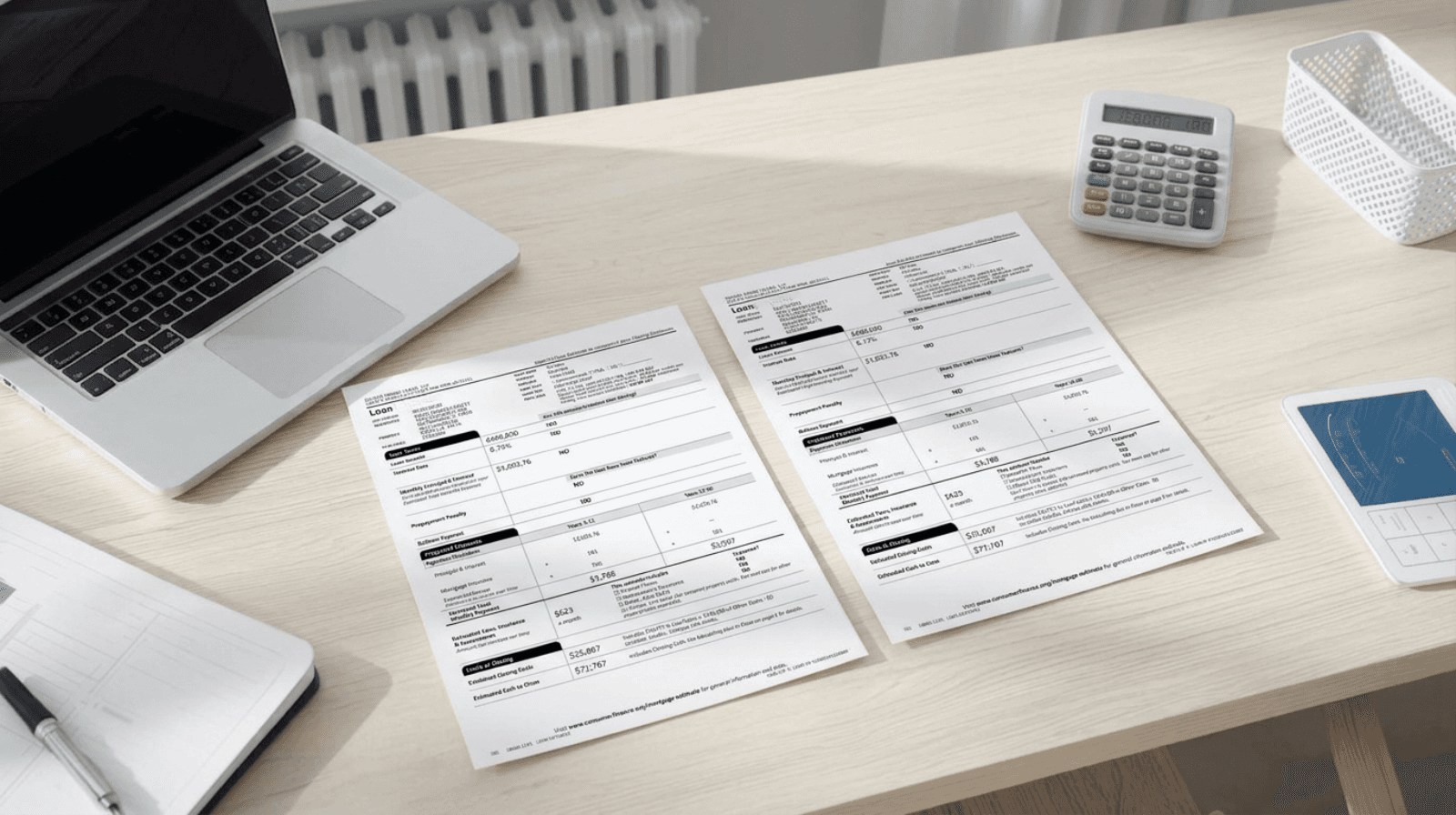

Refinancing can be one of the smartest financial moves a homeowner makes. It can help you lower your monthly payment, reduce your total interest paid, remove PMI, or tap into equity. But there’s one question that matters more than your new interest rate:
“How long will it take before the savings outweigh the upfront costs?”
That moment is known as your break-even point. And if you don’t calculate it correctly — using real numbers from your Loan Estimate — you could refinance into a loan that doesn’t actually save you money.
This guide explains the break-even point, how to calculate and interpret it, the factors that affect it, and how Fincast helps ensure your numbers are accurate (with no extra credit pulls).
Key Takeaways
Your break-even point is the point at which your refinance begins saving more than it costs.
Formula: Total refinance costs ÷ Monthly payment savings.
Typical break-even timelines range from 18–36 months, depending on borrower profile and loan terms.
It’s good practice to only refinance if you plan to stay in the home longer than your break-even point.
High lender fees or discount points extend your break-even — sometimes by years.
💡 Pro Tip: Before calculating your break-even, upload your Loan Estimate to Fincast. The platform verifies fees and exposes hidden charges — no extra credit pull, no spam.
What Is the Break-Even Point in Refinancing?
Your break-even point is the number of months it takes for your monthly savings to equal the upfront cost of refinancing.
Break-Even Formula
Break-Even (months) = Total Refinance Costs ÷ Monthly Savings
Example
Refinance costs: $6,000
Monthly savings: $200
Break-even: 30 months
If you stay beyond 30 months, refinancing pays off. If not, it may cost more than it saves.
💡 Pro Tip: If you can’t tell what your true refinance costs are, upload your Loan Estimate to Fincast and see which refinance pays off the fastest.
Why Break-Even Matters More Than Your Rate
A lower rate doesn’t always mean you’re saving money — especially if:
Lender fees are high
The lender forces discount points
You’re selling or moving soon
You’re switching loan terms
You’re doing a cash-out refinance
Many homeowners focus solely on the interest rate and forget to assess whether refinancing makes financial sense.
The break-even calculation is the easiest way to confirm that.
What Counts as “Refinance Costs”?
To find your break-even point, you first need to know your total refinance costs.
Costs That Count Toward Break-Even
Lender fees (origination, processing, underwriting)
Discount points (if required or chosen)
Appraisal fee
Title fees & lender’s title insurance
Recording fees
Credit report fees
Other lender-required third-party fees
Costs That Do Not Count
Escrow setup
Property taxes
Homeowners insurance
Daily interest charges
These are ongoing homeowner costs, not refinance fees.
⚠️ Many homeowners mistakenly include escrow items, which inflate the break-even timeline.
How to Calculate Your Monthly Savings
Your monthly savings come from the difference between:
Old Mortgage Payment (Principal + Interest) - New Mortgage Payment (Principal + Interest)
Ignore taxes and insurance — they typically don’t change with a refinance unless you alter escrow arrangements.
Real Break-Even Examples
Below are realistic break-even timelines for some homeowners.
Scenario 1: Rate Drops 0.50%
Old rate: 6.50%
New rate: 6.00%
Loan amount: $400,000
Savings: $150/month
Refinance cost: $7,000
Break-even = 7,000 ÷ 150 = 47 months
This is a longer break-even — worth it only if you plan to stay at least 4–5 years.
Scenario 2: Remove PMI
PMI savings: $180/month
Rate drop: minimal
Total savings: $220/month
Costs: $6,000
Break-even = 6,000 ÷ 220 = 27 months
As long as you plan to stay in the home at least 27 months, it pays off.
Scenario 3: Cash-Out Refinance
Cash-out refinances usually have:
Higher rates
Higher fees
Longer break-even
Example:
Costs: $9,000
Savings: $120/month
Break-even = 9,000 ÷ 120 = 75 months
Cash-out is rarely a short-term savings play.
How to Calculate Your Break-Even Point (Step-by-Step)
Step 1: Find total loan costs
Look at your Loan Estimate, Section A + B + part of Section C.
Step 2: Compute your new payment
Use lender disclosures or a mortgage calculator.
Step 3: Determine monthly savings
Old P&I – New P&I.
Step 4: Divide
Refinance cost ÷ monthly savings.
This tells you when your refinance “pays for itself.”
When Refinancing Doesn’t Pay Off
A refinance might not be worth it if:
1. You’re moving or selling soon
For example, if the break-even is 36 months and you’ll move in 24, you would lose money.
2. The lender requires discount points
Some lenders advertise low rates but require 1–2 points. This may significantly increase your upfront costs.
3. Savings are minimal
A refinance that saves $50/month might take years to pay off.
4. You’re extending your loan term significantly
Starting a new 30-year clock may increase long-term interest costs.
5. Cash-out bumps your rate too high
Sometimes taking cash raises your rate enough to erase the benefit.
Factors That Affect Your Break-Even Point
1. Lender Fees
The largest driver of break-even. High fees = longer break-even.
2. Rate Drop Size
Larger rate reductions shorten break-even (but only if fees are reasonable).
3. Loan Amount
Smaller loans often have longer break-even timelines because savings are smaller.
4. Discount Points
Buying down the rate increases costs upfront, extending break-even, unless the rate reduction justifies it.
5. PMI Removal
Removing PMI can shorten the break-even point.
6. Loan Term Choice
Switching between 30-year and 15-year loans affects savings differently.
Break-Even vs. Total Interest Saved
Break-even shows when a refinance starts saving you money each month and the total interest saved tells you how much you save overall.
For example:
A 15-year refinance may not offer monthly savings, but it may save six figures in long-term interest
Use the break-even analysis for short-term decisions, but consider total interest when planning for the long term.
Why Break-Even Is Hard to Calculate Accurately
Lenders often structure fees differently. For example:
Some include discount points
Some bury fees under vague names
Some quote low rates that require thousands upfront
Some provide conservative third-party estimates
Some offer lender credits that reduce the upfront cost
Two Loan Estimates with the same rate can have wildly different break-even outcomes, which is why benchmarking with Fincast is essential.
How Fincast Ensures You’re Using Accurate Numbers
The break-even point only works if the inputs are accurate. Fincast verifies that for you.
Here’s how:
1. Upload your Loan Estimate
No new application
No credit pull
2. Fincast analyzes the offer
It breaks down:
All lender fees
Points
Credits
APR
Closing costs
Rate–cost tradeoffs
3. Competing lenders anonymously try to beat it
Your personal info stays hidden
Lenders sharpen pricing
You see competing offers
4. You use accurate numbers for your break-even
No inflated fees
No hidden costs
No surprises
FAQs: Break-Even Point in Refinancing
What is a good break-even timeline?
Typically, 24–36 months works best, but it varies by borrower profile and loan terms.
Should I refinance if break-even is 5+ years?
Only you can decide if your break-even point is worth it. Compare it to how long you intend to stay in the home to determine the right choice.
Does removing PMI change break-even?
Yes—removing PMI typically shortens your break-even point because you realize immediate savings, but it ultimately depends on the loan's overall cost.
Does extending my term affect break-even?
Monthly savings may increase, but long-term interest may rise, so it’s important to look at the big picture.
Bottom Line
Your break-even point is the single most important number in determining whether a refinance truly saves you money. By dividing your refinance costs by your monthly savings, you can instantly see whether the refinance pays off — and how quickly.
But your break-even calculation is only as accurate as the Loan Estimate it relies on, and lenders vary dramatically in how they structure fees and points.
That’s where Fincast makes all the difference. Let Fincast help you make sense of your Loan Estimate and get multiple offers without pulling your credit or dealing with unnecessary calls.
Action Checklist
☑️ Add up your refinance costs
☑️ Calculate monthly savings
☑️ Determine your break-even
☑️ Evaluate how long you’ll stay in the home
☑️ Upload your Loan Estimate to Fincast
☑️ Benchmark offers anonymously
☑️ Lock in the refinance that pays off fastest and saves you the most
👉 Ready to see whether your refinance actually pays off?
Upload your Loan Estimate to Fincast and let vetted lenders compete anonymously to give you the best pricing — no spam, no extra credit pulls, just savings.
Disclaimer: Nothing in this content should be considered financial advice. The examples and data shared are for general information only and may not reflect your personal situation. We do not guarantee the accuracy or completeness of the information provided. Always do your own research and speak with a qualified financial advisor before making any financial decisions.
Ready to Save On Your New Mortgage?