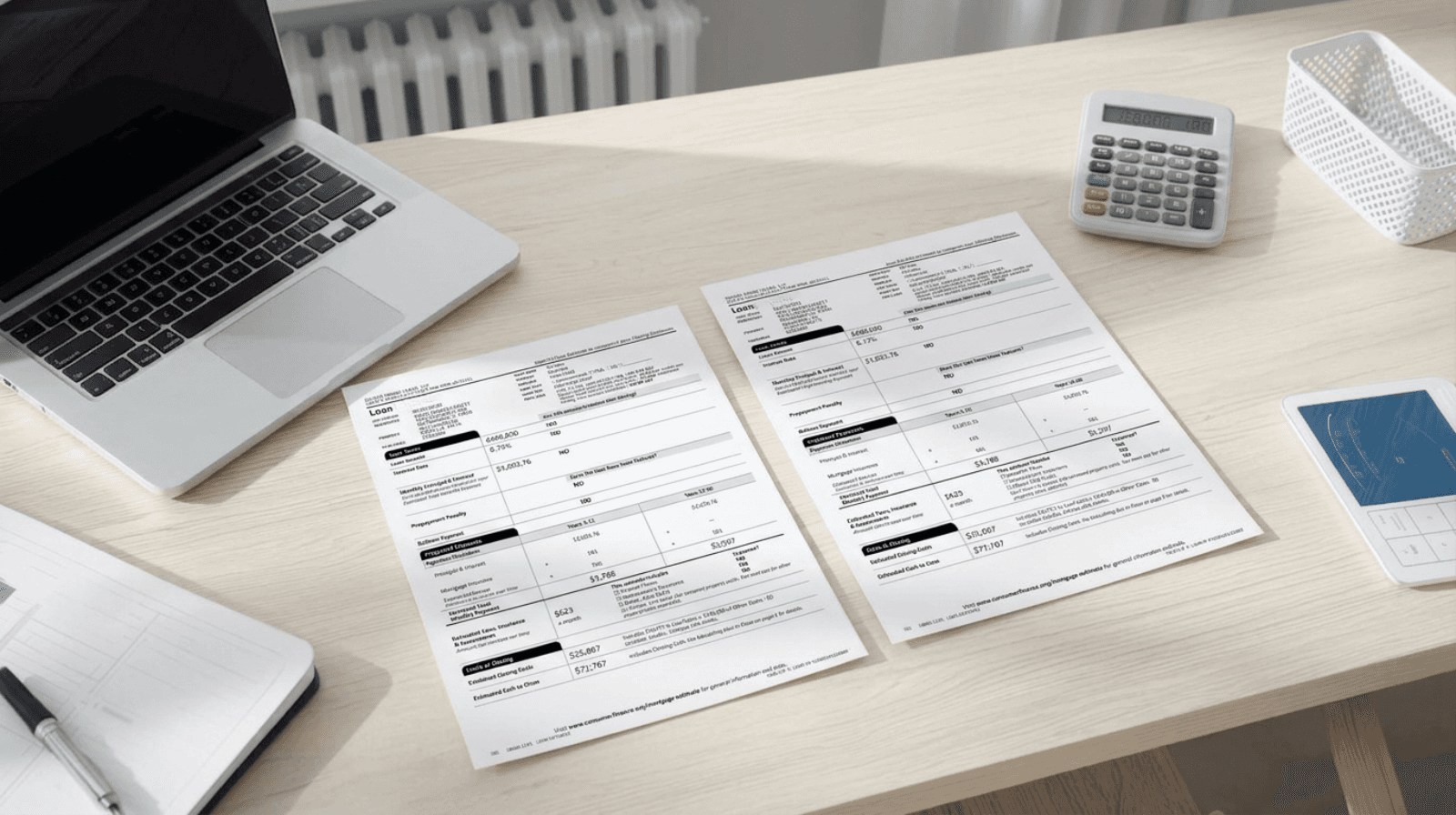

If your current mortgage rate is 7.5%, seeing refinance offers around 6.5% can feel like a great opportunity — and in many cases, it is. A full 1% rate drop can significantly reduce your monthly payment, shorten your break-even timeline, and cut tens of thousands in long-term interest.
But the real answer to “How much will I save?” depends on your loan amount, your refinance costs, and whether your lender requires points to access that 6.5% rate.
This guide breaks down exactly how much a 1% rate drop saves you, how to calculate your break-even point, real examples across loan sizes, and how to confirm your offer using Fincast.
Key Takeaways
Refinancing from 7.5% → 6.5% typically saves $65–$70/month for every $100K borrowed
A 1% drop can reduce total interest by $30,000–$80,000+, depending on loan size
Your break-even depends on closing costs — often 1–3 years, depending on loan size and closing costs
Larger loan balances benefit most from the drop
Comparing lenders is essential because some require costly points to reach 6.5%
How Much Will You Save Going from 7.5% to 6.5%?
Here’s how the payment changes for different loan balances on a 30-year fixed refinance.
Monthly Savings: 7.5% → 6.5%
Loan Amount | 7.5% Payment | 6.5% Payment | Monthly Savings |
$300,000 | ~$2,098 | ~$1,896 | ~$202/mo |
$400,000 | ~$2,797 | ~$2,528 | ~$269/mo |
$500,000 | ~$3,496 | ~$3,160 | ~$336/mo |
$600,000 | ~$4,195 | ~$3,792 | ~$403/mo |
$800,000 | ~$5,594 | ~$5,056 | ~$538/mo |
Rule of thumb:
A full 1% rate improvement can significantly reduce payments and long-term interest for many homeowners.
Rates are for illustrative purposes only and don’t constitute a real loan offer.
Total Interest Savings Over the Life of the Loan
Even if you don’t keep the loan for 30 years, the long-term math is eye-opening.
Example: $400,000 loan, 30-year term
Interest at 7.5%: ~$664,000
Interest at 6.5%: ~$511,000
Total interest saved: ~$153,000 over the life of a new 30-year loan.
Actual savings depend on how long you keep the loan and whether refinancing resets your loan term.
Break-Even Formula: When the Refinance Pays Off
The break-even point shows how long it takes for savings to outweigh your refinance costs.
Break-Even (Months) = Closing Costs ÷ Monthly Savings
Let’s run the numbers for a typical refinance.
Scenario 1 — Standard Refinance ($6,000 Costs)
Monthly savings: $269 (based on $400K loan)
Costs: $6,000
Break-even:
6,000 ÷ 269 ≈ 22 months (~2 years)
✔️ This refinance pays off quickly.
✔️ Great option for anyone staying 2+ years.
Scenario 2 — Low-Cost Refinance ($3,000 Costs)
Break-even:
3,000 ÷ 269 ≈ 11 months
✔ ️ Break-even in under a year is outstanding.
Scenario 3 — No-Cost Refinance ($0 Costs)
Break-even: Immediate
Even if the 6.5% rate is slightly higher than the lender’s best-cost scenario, immediate savings make it nearly a no-brainer.
Important: Refinancing into a new 30-year loan resets your amortization schedule. That means more of your early payments go toward interest again. Some homeowners choose a shorter term (such as 20 or 25 years) when refinancing to avoid extending their payoff timeline.
When Refinancing from 7.5% to 6.5% Makes the Most Sense
✔️ You plan to stay in your home 2+ years
The break-even point at a 1% drop is typically very fast.
✔️ You have a larger loan balance
The savings scale significantly.
✔️ You can secure low or no-cost lender pricing
This accelerates ROI.
✔️ You want to reduce monthly payments
Dropping $200–$500/mo can be transformative for budgeting.
✔️ You want to slash interest
Even keeping the loan for 5–7 years provides large savings.
✔️ You’re removing PMI or transitioning from an ARM
The combined impact can be even greater.
💡 Pro Tip: Before locking a 6.5% refinance rate, review your Loan Estimate carefully. Fincast helps homeowners evaluate lender pricing, compare points versus credits, estimate break-even timelines, and see whether participating lenders may offer alternative pricing — typically without additional credit pulls or sales calls.
When Refinancing May Not Make Sense
❌ Closing costs are unusually high
Some lenders quote inflated fees or require points to hit a 6.5% rate.
❌ You plan to move soon (under 2 years)
You won’t hit break-even.
❌ You expect rates to drop significantly soon
Waiting may get you 6%, 5.875%, or lower.
❌ You recently refinanced
Too soon, and you may not recoup costs again.
❌ You’re taking cash-out
Cash-out refinances have higher pricing; you may not get the clean 6.5%.
Real Example: Will You Save Money?
Homeowner Profile:
Loan balance: $600,000
Current rate: 7.5%
Offered rate: 6.5%
Monthly savings: ~$403
Refinance cost: $6,000
Break-even:
6,000 ÷ 403 = 15 months
Savings:
$4,836/year
$24,180 in 5 years
$48,360 in 10 years
Verdict:
This refinance provides significant long-term value.
Why Comparing Lenders Is Even More Important with Big Rate Drops
Some lenders advertise 6.5% only if you pay:
1 point ($4,000 on a $400K loan)
2 points ($8,000 on a $400K loan)
Meanwhile, another lender may offer:
6.5% with 0 points
Or 6.375% with minimal points
Or 6.625% with lender credits (lower cash-to-close)
The difference can exceed $3,000–$10,000 even with the same 6.5% rate.
This is why a simple rate quote doesn’t tell the full story, which is why many homeowners compare multiple Loan Estimates before committing to a refinance.
How Fincast Helps You Maximize Savings on a 7.5% → 6.5% Refinance
Fincast helps homeowners analyze lender pricing and identify potential fee differences that may affect refinance savings.
1. Upload your Loan Estimate
No new application
Typically, no hard credit pull
No sales calls or spam
2. Fincast breaks down your offer
You see:
Your monthly savings
True cost vs. advertised cost
Points vs. credits
Required vs. optional fees
Break-even timeline
Whether 6.5% is competitive
3. Vetted lenders may submit competing offers based on your Loan Estimate
You’ll see if another lender can offer:
Lower rate
Lower fees
Lower points
Better lock options
4. Choose the refinance option that best fits your savings goals
If your current offer is already great, Fincast confirms it.
If not, you can choose the more competitive deal offered.
FAQs: Refinancing from 7.5% to 6.5%
Is a 1% rate drop worth refinancing?
It depends on your financial profile, but it often makes sense for loan balances above $300K.
How long is the break-even for a 1% drop?
Often 12–24 months, but it depends on your exact savings and costs.
How much can I save monthly?
About $65–$70/month for every $100,000 borrowed.
Can I refinance again later?
Yes — many homeowners refinance multiple times during rate drops.
Do I need perfect credit to get 6.5%?
Strong credit helps, but lender differences often matter more.
Bottom Line
Refinancing from 7.5% to 6.5% is often a strong financial move for many homeowners. With monthly savings averaging $65-$70/month per $100,000 borrowed and break-even periods under two years, the math frequently works in your favor — especially with larger loan balances.
But fees, points, and lender pricing differences matter.
Don’t refinance until you know your offer is competitive.
That’s exactly what Fincast helps you confirm. If you already have a refinance quote, the fastest way to confirm the savings is to review your Loan Estimate.
Action Checklist
☑️ Check your current mortgage balance
☑️ Calculate your new payment at 6.5%
☑️ Estimate monthly savings
☑️ Calculate break-even using your actual costs
☑️ Review point requirements
☑️ Request your Loan Estimate
☑️ Upload your Loan Estimate to Fincast
☑️ Compare offers from vetted lenders
☑️ Refinance only if the numbers make sense
👉 Before committing to a refinance, make sure your offer is actually competitive. Upload your Loan Estimate to Fincast and see how your quote compares with pricing from participating lenders — no spam, no sales calls, and typically no additional credit pulls.
Disclaimer: Nothing in this content should be considered financial advice. The examples and data shared are for general information only and may not reflect your personal situation. We do not guarantee the accuracy or completeness of the information provided. Always do your own research and speak with a qualified financial advisor before making any financial decisions.
Ready to Save On Your New Mortgage?