
Refinancing from a 15-year mortgage to a 30-year loan can feel like a step backward — but for many homeowners, it’s a strategic financial move that restores cash flow, reduces monthly pressure, and frees up money for bigger financial priorities.
A 30-year refinance can lower your monthly payment by hundreds of dollars, improve your debt-to-income ratio (DTI), and make budgeting more manageable during major life transitions. The key is knowing exactly when the switch makes sense — and when it doesn’t.
This guide breaks down the benefits, drawbacks, eligibility requirements, timing, costs, and how to compare offers safely before you refinance into a longer term.
Key Takeaways
✅ Refinancing into a 30-year mortgage lowers your monthly payment and increases financial flexibility
✅ You’ll pay more interest over time, but you may free up money for debt payoff, investing, or emergencies
✅ Homeowners often switch terms due to income changes, childcare costs, retirement planning, or rising expenses
✅ Approval depends on your credit score, equity (LTV), DTI, and recent payment history
Why Homeowners Refinance from a 15-Year to a 30-Year Mortgage
Although a 15-year mortgage is ideal for fast payoff, its higher monthly payment isn’t the best fit for every stage of life. Many homeowners switch to a 30-year term for:
1️⃣ More Cash Flow Each Month
A 30-year mortgage significantly reduces your monthly payment because the payoff timeline is extended.
More cash flow gives you flexibility for:
Childcare expenses
Medical bills
Home repairs
Job changes
Retirement contributions
Paying down other debt
Sometimes, breathing room is worth more than speed.
2️⃣ Lower Debt-to-Income Ratio (DTI)
A lower monthly payment instantly improves your DTI — a critical factor for:
Qualifying for future loans
Getting better refinance rates
Managing credit card or personal loan balances
Financing home improvements or vehicles
If your current 15-year payment is stretching your budget, switching can help stabilize your financial picture.
3️⃣ Life Transitions or Unexpected Expenses
Major life events often prompt a switch to a 30-year loan:
New baby
Divorce or separation
Taking care of aging parents
Job relocation or career change
Health issues
Loss of side income
A lower payment can provide much-needed financial stability during uncertainty.
4️⃣ Planning for Retirement
Many homeowners realize:
“I’d rather have lower payments now and invest the difference.”
This is especially true if:
You’re within 5–15 years of retirement
You want more liquidity
You prefer to boost retirement contributions
Your retirement savings are lagging behind schedule
Switching to a 30-year loan may support a stronger long-term strategy.
5️⃣ Leveraging Low Rates for Flexibility
Even if your current 15-year rate is strong, extending the loan term to 30 years may still reduce your monthly payment because the repayment period is longer. It can also:
Increase cash flow
Improve your financial security
How Much Can You Lower Your Monthly Payment?
A 30-year refinance can significantly reduce your payment.
Example:
$350,000 loan
5.25% 15-year → 6.25% 30-year
Loan Type | Monthly Payment | Total Interest |
15-Year | $2,804 | ~$154,000 |
30-Year | $2,155 | ~$425,000 |
Monthly savings: ~$649
Long-term tradeoff: More interest paid over time.
Every homeowner must weigh:
Immediate stability
Lifetime interest costs
Example for illustration only — rates vary by lender, credit profile, and market conditions.
Why Refinance Pricing Can Vary More Than You Expect
Many homeowners assume refinance offers are mostly the same across lenders.
In reality, pricing can vary significantly depending on:
• Credit score • Loan-to-value ratio (LTV) • Debt-to-income ratio • Loan size • Property type • Internal lender pricing models
Even small differences — such as 0.25% in interest rate or a few thousand dollars in fees — can meaningfully affect the long-term cost of a refinance.
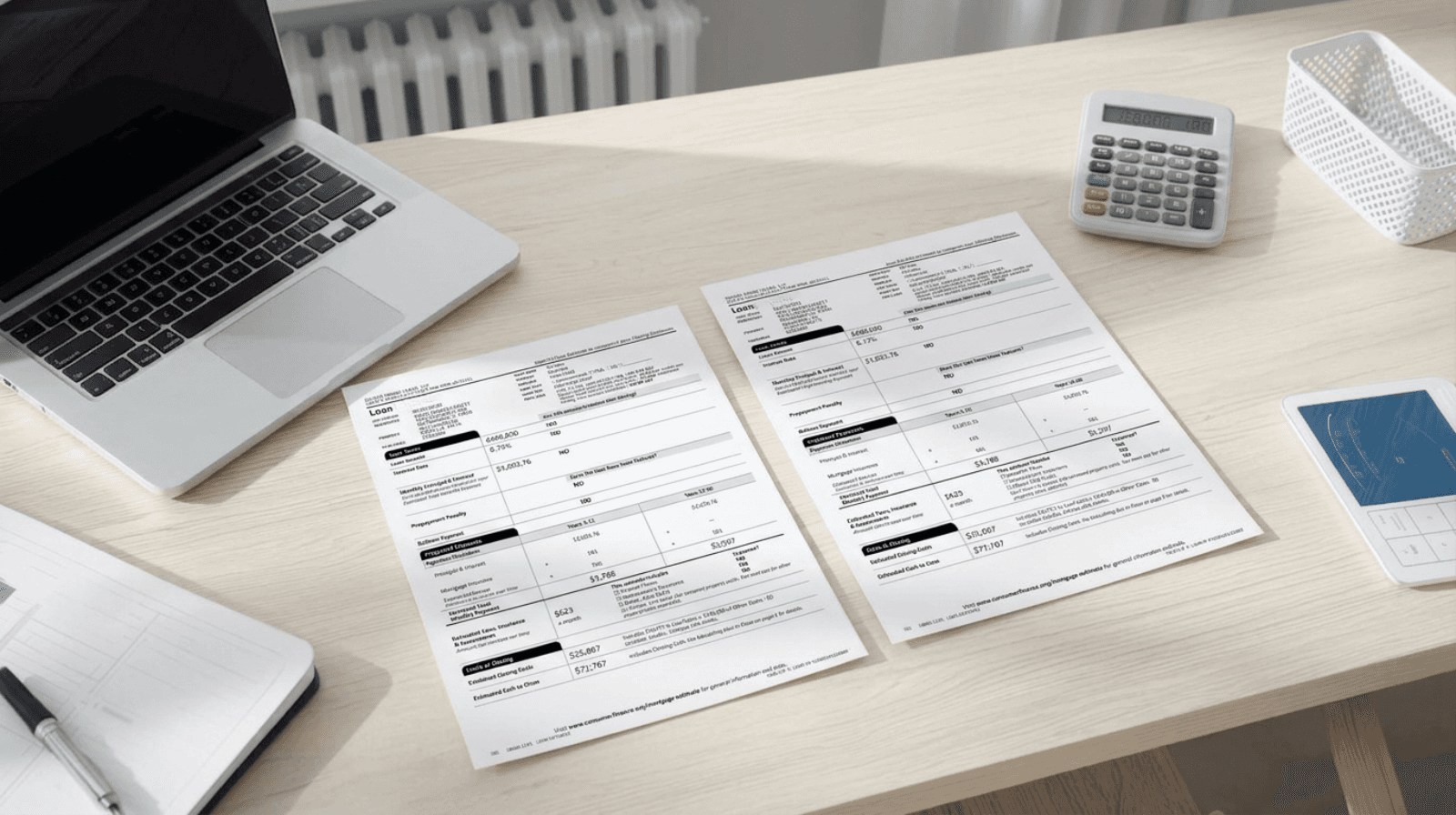
That’s why some homeowners review their Loan Estimate before locking their rate.
Is It a Bad Idea to Refinance from a 15-Year to a 30-Year Mortgage?
Every homeowner has to make financial decisions that suit their long-term plans. Refinancing from a 15-year to a 30-year loan may make sense if:
1️⃣ Your Budget Is Too Tight
If your 15-year mortgage is consuming:
More than 35–40% of your income
Your savings buffer
Your ability to invest
It may be a sign that a 30-year payment may be more sustainable.
2️⃣ You Have High-Interest Debt
If you're paying:
20%+ on credit cards
12%+ on personal loans
High auto loan rates
It may make more sense to refinance into a 30-year mortgage, freeing up cash to pay down higher-interest debt.
3️⃣ You’re Building Your Financial Foundation
A 30-year refinance helps when your goals include:
Building an emergency fund
Saving for retirement
Starting a business
Funding education
Weathering unpredictable income
A lower mortgage payment gives you room to grow.
4️⃣ You Plan to Rent the Home Later
Lower payments = higher cash flow.
If you’re converting the home into a rental property in the future, a 30-year mortgage often makes the math work better.
5️⃣ You Have a Long Horizon
If you plan to stay in the home for several years, the improved monthly cash flow may outweigh the long-term interest tradeoff for some homeowners.
When Switching to a 30-Year Mortgage Does Not Make Sense
A longer-term refinance may not be the best option if:
1️⃣ You Have Plenty of Cash Flow Already
If your 15-year payment is comfortable, refinancing may not be worth the additional interest.
2️⃣ You’re Very Close to Payoff
If you have 5 years or less remaining, refinancing resets your clock and dramatically slows equity growth.
3️⃣ Your New Rate Would Be Much Higher
If rates have increased significantly since your original 15-year mortgage, refinancing may not make financial sense.
4️⃣ You Have Low Equity or Credit Challenges
If your LTV is high, PMI may return, adding costs you worked hard to eliminate.
5️⃣ You’re Trying to Pay Off Your Home Before Retirement
A 30-year loan might push your payoff date beyond your retirement plans.
Eligibility Requirements for a 30-Year Refinance
Approval follows standard refinance requirements.
1️⃣ Credit Score
General minimums:
620 for conventional
580 for FHA
600+ preferred for VA
Higher scores yield better pricing.
2️⃣ Home Equity (LTV)
Typical limits:
95% LTV for rate-and-term
80% LTV for best pricing
80% LTV for cash-out
3️⃣ Debt-to-Income Ratio
With a lower payment, DTI often improves automatically.
Most lenders accept:
≤45% DTI
Sometimes 50% with strong compensating factors
4️⃣ Income & Employment History
Usually:
2 years of employment
Consistent earnings
Documented bonuses/commissions
5️⃣ Payment History
Typically:
No mortgage lates in the past 6–12 months
Pros and Cons of Refinancing from 15-Year to 30-Year
✔ Pros
Much lower monthly payment
Increased financial security
Easier to manage unexpected expenses
Better DTI
More money available for investing or debt payoff
Greater budget flexibility
✘ Cons
Higher total interest over the life of the loan
Slower equity growth
Longer path to mortgage freedom
PMI may return if equity is low
FAQs
1. Will refinancing into a 30-year mortgage hurt my credit?
Only slightly. A refinance results in a single hard inquiry, but long-term, on-time payments help your score.
2. Can I switch back to a 15-year loan later?
Yes. You can refinance again or make extra principal payments to mimic a 15-year payoff.
3. Do I need 20% equity to refinance?
No, but having 20% improves pricing and removes PMI risks.
4. Can I refinance to a 30-year mortgage if I’m self-employed?
Yes — as long as you have a stable income and documentation.
5. Is refinancing worth it if I’m only saving $300–$400 per month?
Often yes — especially if that cash improves financial stability or pays down higher-interest debt.
Bottom Line
Refinancing from a 15-year to a 30-year mortgage can be a smart way to reduce financial stress, improve your cash flow, and build long-term stability. While it increases your total interest over time, the immediate flexibility often provides meaningful benefits — especially during major life transitions or periods of rising expenses.
If you’re considering the switch, it’s important to see whether your lender is offering the best possible rate and terms for your profile.
Many homeowners are surprised to learn that refinance pricing can vary between lenders — even for borrowers with identical credit and loan profiles.
You can upload your Loan Estimate to Fincast to see how your refinance terms compare across vetted lenders. It’s free, private, and helps you understand whether your current offer is competitive before you commit — no pressure, no spam, just clarity.
Disclaimer: Nothing in this content should be considered financial advice. The examples and data shared are for general information only and may not reflect your personal situation. We do not guarantee the accuracy or completeness of the information provided. Always do your own research and speak with a qualified financial advisor before making any financial decisions.
Ready to Save On Your New Mortgage?