
Refinancing can save you thousands — but timing your rate lock correctly can determine whether those savings actually happen.
Mortgage rates change constantly, sometimes multiple times per day. That means the moment you lock your rate can significantly impact your monthly payment and total loan cost.
Lock too early, and you might commit to a lender before confirming the pricing is competitive.
Lock too late, and rising rates could erase the savings that made refinancing worthwhile in the first place.
Once your rate is locked, negotiating power drops significantly.
Lenders know most borrowers won't restart the process once they've locked.
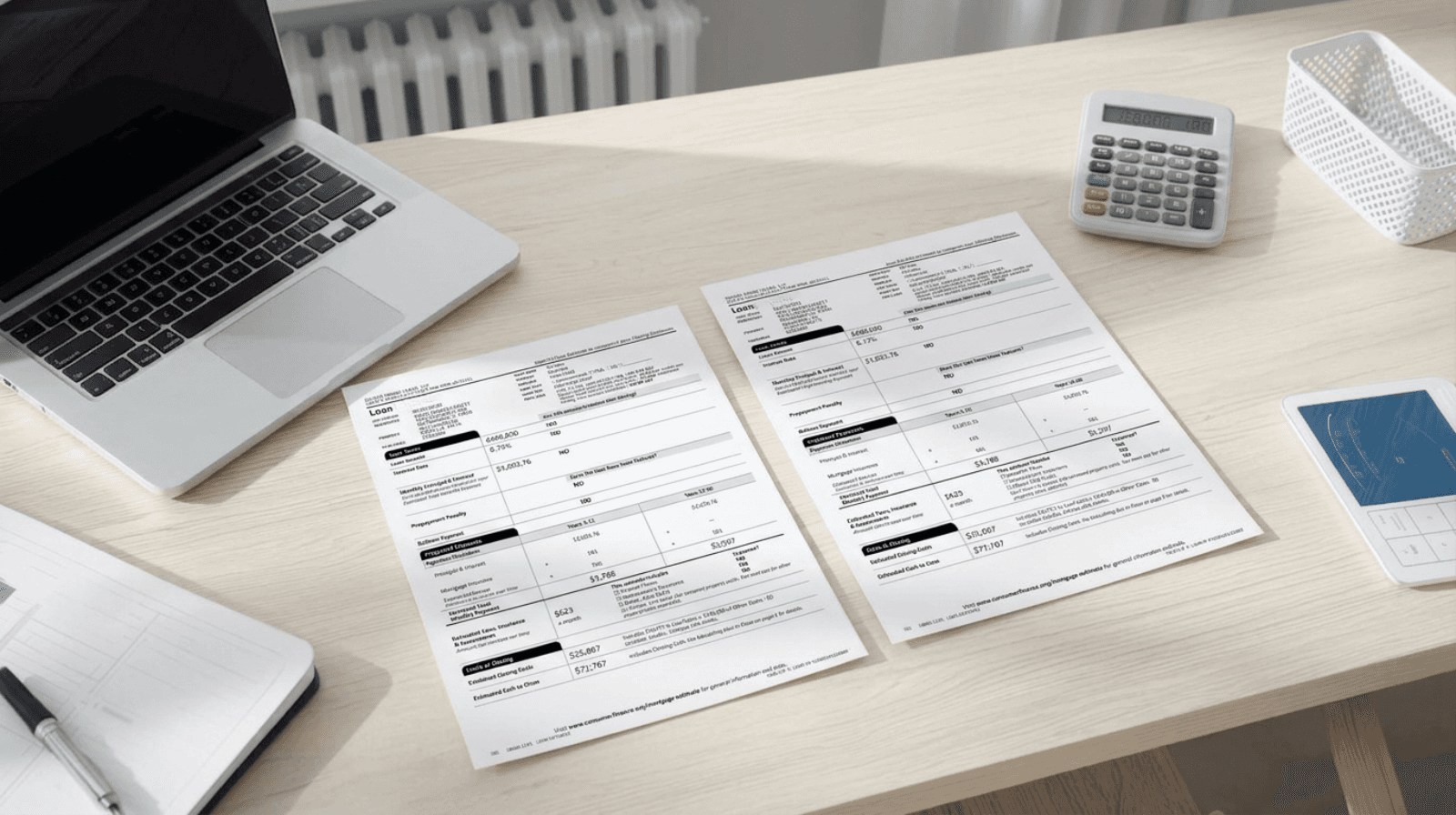
That’s why comparing Loan Estimates before locking is one of the most important steps in refinancing.
Key Takeaways
A rate lock protects you from rising rates until your refinance closes
Common lock periods are 30, 45, 60, or 90 days — longer locks cost more
When you lock determines your pricing, your break-even, and your total savings
Some lenders allow “float-downs” if rates drop after you lock — others don’t
Always compare lenders before locking to avoid expensive pricing traps
What Does It Mean to Lock Your Refinance Rate?
A rate lock guarantees your interest rate for a specific period (usually 30–60 days) while you complete your refinance.
Once locked:
Your rate is frozen, even if the market rises
Your rate, points, and lender credits are locked based on the current loan details
Your pricing won’t change due to market rate movements during the lock period
However, your lock does not protect you from:
Changes in loan amount
Major credit changes
Program updates
Property issues
Lock expiration
Understanding these terms protects you from surprises during the refinance process.
Step-by-Step: How to Lock in a Refinance Rate
Here’s the exact playbook homeowners should follow.
Step 1: Compare Lenders Before Locking
This is the most important step.
Once you lock a rate with a lender:
You lose negotiation power
Switching lenders becomes harder
You may be stuck with higher fees or required points
Always compare loan estimates before locking.
💡 With Fincast, you simply upload your Loan Estimate, and vetted lenders may submit competing offers — typically without impacting your credit.
Why Many Homeowners Lock Overpriced Rates
Most borrowers assume mortgage rates are identical across lenders.
They’re not.
Two lenders quoting the same rate can still have dramatically different pricing due to:
• Required discount points
• Lender fees
• Lock period pricing adjustments
• Internal margin differences
That means a borrower who locks too quickly may unknowingly accept thousands in extra costs.
That’s why comparing Loan Estimates before locking is critical.
💡 Pro Tip: Before locking your refinance rate, upload your Loan Estimate to Fincast. You’ll benchmark your offer, help identify potential fees or pricing differences, and vetted lenders may submit competing offers — typically without impacting your credit.
Step 2: Request a Loan Estimate (LE)
A Loan Estimate outlines:
Your rate
Points
Fees
Credits
Cash-to-close
You cannot meaningfully compare offers without this document. Never lock based on a verbal quote or an online teaser rate.
Step 3: Evaluate Your Rate, Costs, and Break-Even
Before locking, look at:
Rate
Points
Lender credits
Loan type
Loan term
Total closing costs
If your break-even is too long, locking doesn’t make sense yet.
Step 4: Choose the Right Lock Period
Common lock terms:
Lock Term | Best Use | Cost |
30 days | Fast refinances | Lowest |
45 days | Standard refinances | Slightly higher |
60 days | Complex files / busy markets | Higher |
90+ days | Rare, new construction | Highest |
Rule of thumb:
If the lender says it will take 30 days to close, choose 45 days.
You need a buffer.
Step 5: Ask About Float-Down Options
A float-down allows you to lock now, but lower your rate later if the market drops.
Not all lenders offer this.
If they do:
It may only trigger with market changes of 0.25%+
It may require a fee
It’s usually available only once
If they don’t:
A locked rate stays locked, even if rates fall
Knowing this early can save you from overpaying.
Step 6: Lock Your Rate
Your lender will send a:
Lock confirmation
Rate lock agreement
Updated Loan Estimate with locked pricing
Make sure your lock period covers your expected closing date + a buffer.
Step 7: Avoid Changes That Could Affect Your Lock
Even with a lock, certain changes can alter your pricing:
Credit score drops
Debt-to-income increases
Appraisal comes in low
You change your loan type
You change your loan amount
A rate lock protects you from market swings — not loan changes.
Step 8: Monitor the Timeline Until Closing
You must close before your rate lock expires.
If delays occur, you may need a lock extension, which may include:
A daily or flat extension fee
A rate increase (for example: +0.125%)
Stay in close communication with your loan officer so processing stays on track.
How Rising or Falling Rates Affect Lock Timing
✔️ Lock Early When:
Rates have been rising
Inflation reports are coming
Lenders expect volatility
You’re satisfied with your current pricing
✔️ Wait to Lock When:
Rates have been trending down
The market is stable
You’re still comparing lenders
You haven’t received your final Loan Estimate
Lock timing is strategic — not random.
Cost Impact: How Locks Change Your Pricing
Lenders charge more for longer locks because they carry more interest-rate risk.
Example: $400,000 refinance
30-day lock: 6.125%
45-day lock: 6.25%
60-day lock: 6.375%
Difference in payment:
6.125% → ~$2,428/mo
6.375% → ~$2,496/mo
That's $68/month — or $816/year — just from the lock period.
And that’s why choosing the correct lock length matters.
These rates are for illustrative purposes only and do not constitute a real loan offer.
The Biggest Rate Lock Mistakes (Avoid These)
❌ Locking too early
You trap yourself if the quote wasn’t competitive.
❌ Choosing the shortest possible lock
Extensions are expensive.
❌ Not asking about float-down options
Missing a market drop can cost you thousands.
❌ Assuming all lenders price locks the same
They don’t — this is a major pricing differentiator.
❌ Not checking for required points
A “low rate” may require thousands in points to lock.
❌ Not comparing Loan Estimates before locking
The fastest way to overpay.
How Fincast Helps You Lock the Most Competitive Rate
Fincast removes the guesswork from lock timing and pricing.
1. Upload your Loan Estimate
No new application
No hard credit pull
No spam
2. Fincast analyzes your pricing
You see:
Whether your rate is competitive
Required vs. optional points
Lock period cost differences
Rate-cost tradeoffs
3. Vetted lenders provide competing offers
You don’t share any of your personal information, but receive the option to choose other deals with potentially better rates or terms.
4. You lock with confidence
Whether you lock today, tomorrow, or next week, you’ll know it’s the right move.
FAQs: How to Lock a Refinance Rate
How long should I lock my refinance rate?
Most homeowners choose 45 days for safety, but choose the period that suits your timeline.
Do rate locks cost money?
Sometimes directly, sometimes embedded into your rate.
Can I switch lenders after locking?
Yes, but you’ll need a new lock with the new lender.
What happens if my lock expires?
You’ll need an extension or new pricing.
Can I lower my rate after locking?
Only if your lender offers a float-down option.
Bottom Line
Locking your rate is one of the most important decisions in the refinance process. Done right, it protects your savings and ensures predictable costs. Done wrong, it can cost thousands in extensions, higher rates, or unnecessary fees.
The key is simple:
Compare your offer before locking — and lock only when the pricing, timing, and terms align.
That’s exactly what Fincast helps you do.
Action Checklist
☑️ Request your Loan Estimate
☑️ Compare your rate, points, and credits
☑️ Ask about float-down options
☑️ Choose the right lock period (30/45/60 days)
☑️ Confirm the lender’s expected closing timeline
☑️ Upload your Loan Estimate to Fincast
☑️ Compare pricing from vetted lenders anonymously
☑️ Lock your rate with confidence
👉Before you lock your refinance rate, make sure your offer is actually competitive.
Upload your Loan Estimate to Fincast and:
• Benchmark your rate against real lender pricing
• Identify unnecessary points or fees
• Allow vetted lenders to submit competing offers anonymously
• Create real pricing pressure — without additional applications
No spam. No sales calls. No extra credit pulls in most cases.
Disclaimer: Nothing in this content should be considered financial advice. The examples and data shared are for general information only and may not reflect your personal situation. We do not guarantee the accuracy or completeness of the information provided. Always do your own research and speak with a qualified financial advisor before making any financial decisions.
Ready to Save On Your New Mortgage?