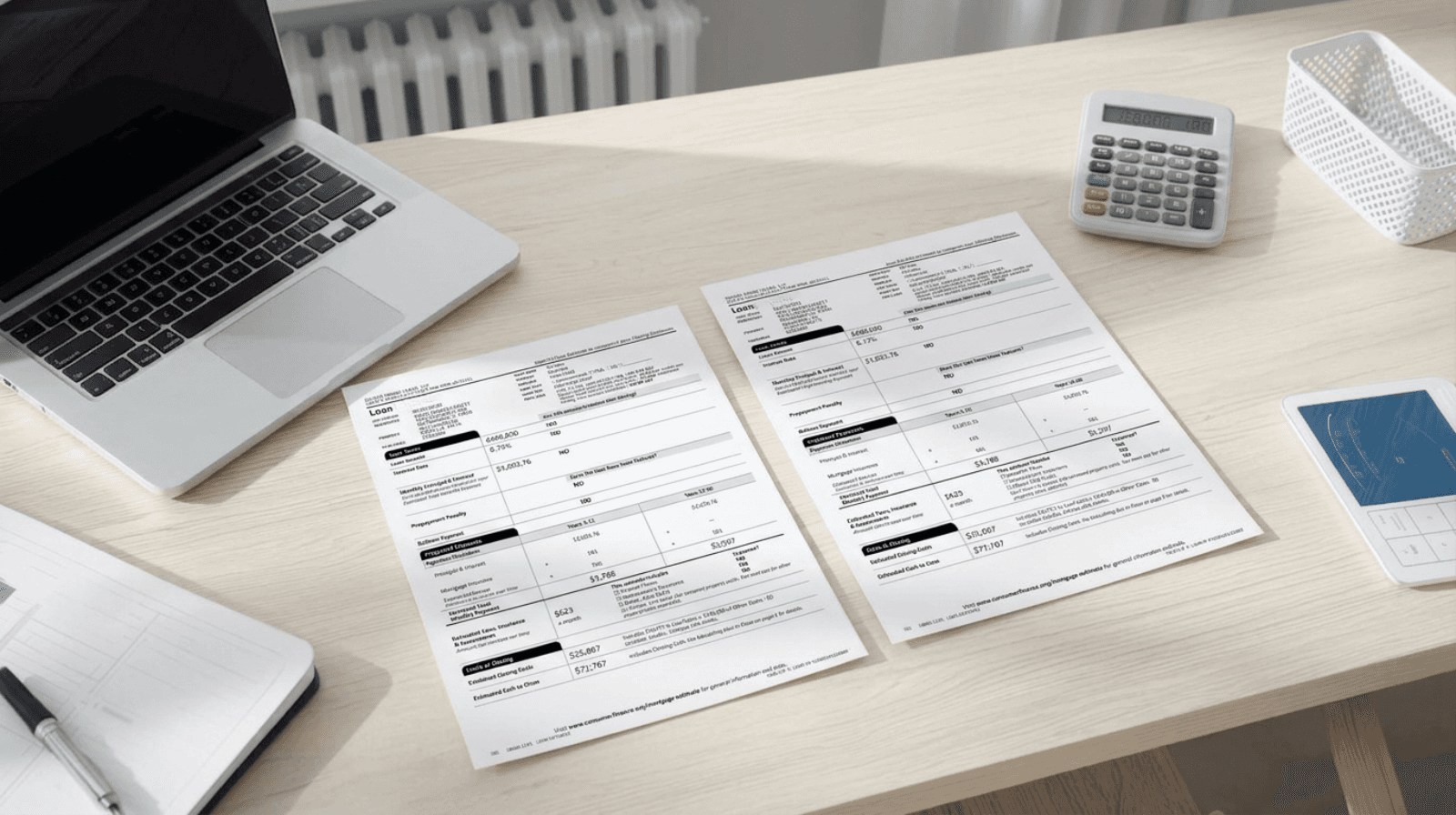

If you’re earning around $70,000 per year, refinancing your mortgage may be one of the smartest ways to lower your monthly payment, reduce your interest rate, remove PMI, or access better loan terms. But one question stops a lot of homeowners:
👉 Is my income enough to qualify for a refinance?
Good news: A $70K salary is often enough for most refinance programs, including conventional, FHA, and VA refinances. But like any mortgage, approval depends on more than income alone. Lenders look closely at your debt-to-income ratio (DTI), credit score, home equity, and loan type to determine how much you can qualify for.
Don’t assume you’ll get the best rates and terms because you make $70K. Make lenders compete for your business by offering competitive deals. This guide breaks everything down step-by-step — how much home you can refinance on a $70K salary, the DTI limits, credit requirements, loan options, and how to improve your approval odds before applying.
Key Takeaways
✅ A $70K salary is often sufficient for many refinance programs
✅ Lenders base approval mostly on DTI, not income alone
✅ Higher income gives you more flexibility — but your credit score still affects your rate the most
How Much Home Can You Refinance on a $70K Salary?
A $70K salary gives you a strong foundation for approval — but the exact refinance amount depends heavily on your monthly debts and interest rate.
With a $70K income:
Gross monthly income ≈ $5,833
Most lenders prefer a DTI of 36–45%, though some programs may allow higher, depending on your borrower profile
That means max total debts of $2,100–$2,625/month
This includes:
Your new mortgage payment
Property taxes
Insurance
Mortgage insurance (if applicable)
Student loans
Car loans
Credit card minimums
Here’s a quick example:
If you earn $5,833/month and carry $500 in car and credit card payments, a 45% DTI limit of $2,625 would leave approximately $2,124 available for your mortgage payment (including taxes and insurance).
💡 Pro Tip: At this income level, small pricing differences matter more than most homeowners realize. A slightly higher rate can cost you thousands of dollars more over time.
Credit Score Requirements on a $70K Salary
Your income helps, but your credit score is the biggest factor affecting:
Your rate
Your PMI cost
Your loan eligibility
Your overall monthly payment
Minimum credit scores required to refinance:
Loan Type | Minimum Score | Best Rates |
Conventional | 620 | 740+ |
FHA | 580 | 680+ |
VA | 580–620 *VA loans do not have a set minimum score from VA, but most lenders require 580–620+. | 700+ |
Jumbo | 700+ | 740+ |
Even with a $70K income, poor credit can:
Raise your rate
Increase PMI
Limit refinance options
Reduce how much you qualify for
💡 Pro Tip: Improving your score by 20–40 points can reduce your rate by 0.25–0.50%, which could save you thousands over the loan term or increase the amount you can borrow.
How Much Equity Do You Need to Refinance on a $70K Salary?
This depends on the refinance type:
Refinance Type | Minimum Equity Needed |
Conventional rate-and-term | 5–20% |
Conventional (remove PMI) | 20% |
FHA rate-and-term | ~3% |
FHA streamline | May not require equity verification |
VA IRRRL | May not require equity verification |
Cash-out refinance | Must leave 20% equity remaining |
💡 Pro Tip: If you want to remove PMI, conventional refinancing with 20% equity is the best strategy.
Best Refinance Options for a $70K Salary
Depending on your borrower profile, you may have many options, including the following.
1️⃣ Conventional Rate-and-Term Refinance
Conventional loans are ideal when:
Your credit score is 680+
You want to drop PMI
You have 20% equity
You want long-term savings
Benefits:
Low PMI (or none with 20% equity)
Strong rate opportunities for good credit
Flexibility with terms (15-, 20-, 30-year options)
2️⃣ FHA Refinance (including FHA Streamline)
FHA loans are often best for:
Lower credit scores
Higher DTI ratios
Avoiding full documentation
Homes with uncertain values
Benefits:
Easier approval
Lower MIP for some borrowers
Streamline version may require limited paperwork
3️⃣ VA IRRRL (if you’re eligible)
VA loans are for veterans and their surviving spouses. The benefits include:
Limited income verification
Streamlined underwriting
No appraisal (in some cases)
No PMI
4️⃣ Cash-Out Refinance
A cash-out refinance allows you to tap into your home’s equity, but you must meet the underwriting requirements.
20% equity remaining
Strong credit
Solid payment history
Best for:
Renovations
Debt consolidation
Investments
Education expenses
💡Pro Tip: Always compare your loan options to get a competitive deal. Apply for a loan with any lender, upload the Loan Estimate you receive to Fincast, and let it do the work for you. No credit pulls. No spam.
How to Improve Your Refinance Approval Odds on a $70K Salary
✔ 1. Lower Your DTI
Pay off:
Credit cards
Small personal loans
Auto loans (if the balance is low)
Every $100 reduction in monthly debt can raise your refinance approval amount by thousands.
✔ 2. Improve Your Credit Score
Focus on:
Reducing credit card balances
Removing errors on your credit report
Avoiding new credit inquiries
Paying all bills on time
✔ 3. Increase Your Equity (If Possible)
Ways to do this:
Make extra principal payments
Wait for market appreciation
Improve your home’s value with strategic updates
✔ 4. Compare Multiple Lenders
A $70K salary may make you a strong borrower if your overall financial picture is in good shape.
But, even at this income level, two lenders can price the same refinance very differently.
Small differences in requirements can change your rate, costs, or even your loan approval amount.
That’s why comparison matters — especially when you’re already in a strong approval range.
How Fincast Helps You Refinance on a $70K Salary
Lenders may offer more competitive pricing when they know you’re comparing options. If you’re looking for a competitive deal, you need to shop around. At $70K a year, you may qualify easily — but that doesn’t guarantee you’re getting optimal pricing. Small differences in lender margins can quietly cost thousands over the life of your loan.
Fincast makes comparison simple and transparent once you have a Loan Estimate from a single lender. Here’s how it works:
1️⃣ Upload your Loan Estimate (securely)
2️⃣ Fincast shares it anonymously with vetted lenders
3️⃣ Lenders may offer improved pricing based on your Loan Estimate
4️⃣ You choose the best offer — no spam, no extra credit pulls
Even a small 0.25% rate drop can save you:
Thousands in interest
Hundreds per year
Faster equity growth
With a $70K salary, competitive rates can make a major difference in long-term affordability — and Fincast helps ensure transparency so you make confident choices.
FAQs: Refinancing on a $70K Salary
1. Is $70K enough to refinance a home?
Yes — most lenders approve borrowers at this income level if DTI and credit meet guidelines.
2. How much can I refinance with a $70K salary?
How much you can borrow depends largely on your credit score, DTI, and loan-to-value ratio.
3. What DTI do lenders require?
Generally, 36–45% for conventional loans and up to 50%+ for FHA loans, but exact requirements vary by lender.
4. Can I refinance with bad credit?
Every lender has different requirements, so it’s important to shop around and see what lenders will offer you, even with bad credit.
5. Can I get a cash-out refinance at this income level?
Yes, if your DTI remains within limits and you have enough equity.
6. Do I need an appraisal?
Whether you need an appraisal depends on the loan program and lender. Always check with your lender to determine their requirements.
7. Will refinancing hurt my credit score?
Refinancing can initially hurt your credit score due to the inquiry and the new credit on your credit report. But with timely payments, the dip is usually temporary.
Bottom Line
A $70K salary may provide strong refinance opportunities if your complete borrower profile meets lender requirements — whether you want lower monthly payments, better terms, or to remove PMI. You’ll want to focus on:
✅ Managing your DTI
✅ Improving your credit
✅ Building or verifying your equity
✅ Comparing lender offers
You’re in the best position when:
You know your debt-to-income ratio
Your credit score is solid
You’ve compared multiple lenders
Pro Tips (Save These!)
💡 Keep your DTI under 45% for smoother approval
💡 Pay off small monthly debts before applying
💡 FHA offers strong flexibility if credit isn’t perfect
💡 Conventional is ideal if you want to ditch PMI
💡 Benchmark every Loan Estimate through Fincast before committing
Action Checklist
✔ Calculate your monthly debts and DTI
✔ Check your credit score and improve where possible
✔ Determine whether you want rate savings, lower term, or cash-out
✔ Estimate your home equity
✔ Request a Loan Estimate from your lender
✔ Upload your Loan Estimate to Fincast
✔ Choose the offer that provides the greatest long-term savings
👉 Ready to see how much you can qualify for — and how much you can save?
Upload your Loan Estimate to Fincast, where vetted lenders compete to help you get your best refinance offer — no spam, no extra credit pulls, just real savings.
This article is for educational purposes only and does not constitute financial, legal, or tax advice. Mortgage requirements vary by lender and individual circumstances. Consult with licensed professionals for your specific situation.
Disclaimer: Nothing in this content should be considered financial advice. The examples and data shared are for general information only and may not reflect your personal situation. We do not guarantee the accuracy or completeness of the information provided. Always do your own research and speak with a qualified financial advisor before making any financial decisions.
Ready to Save On Your New Mortgage?