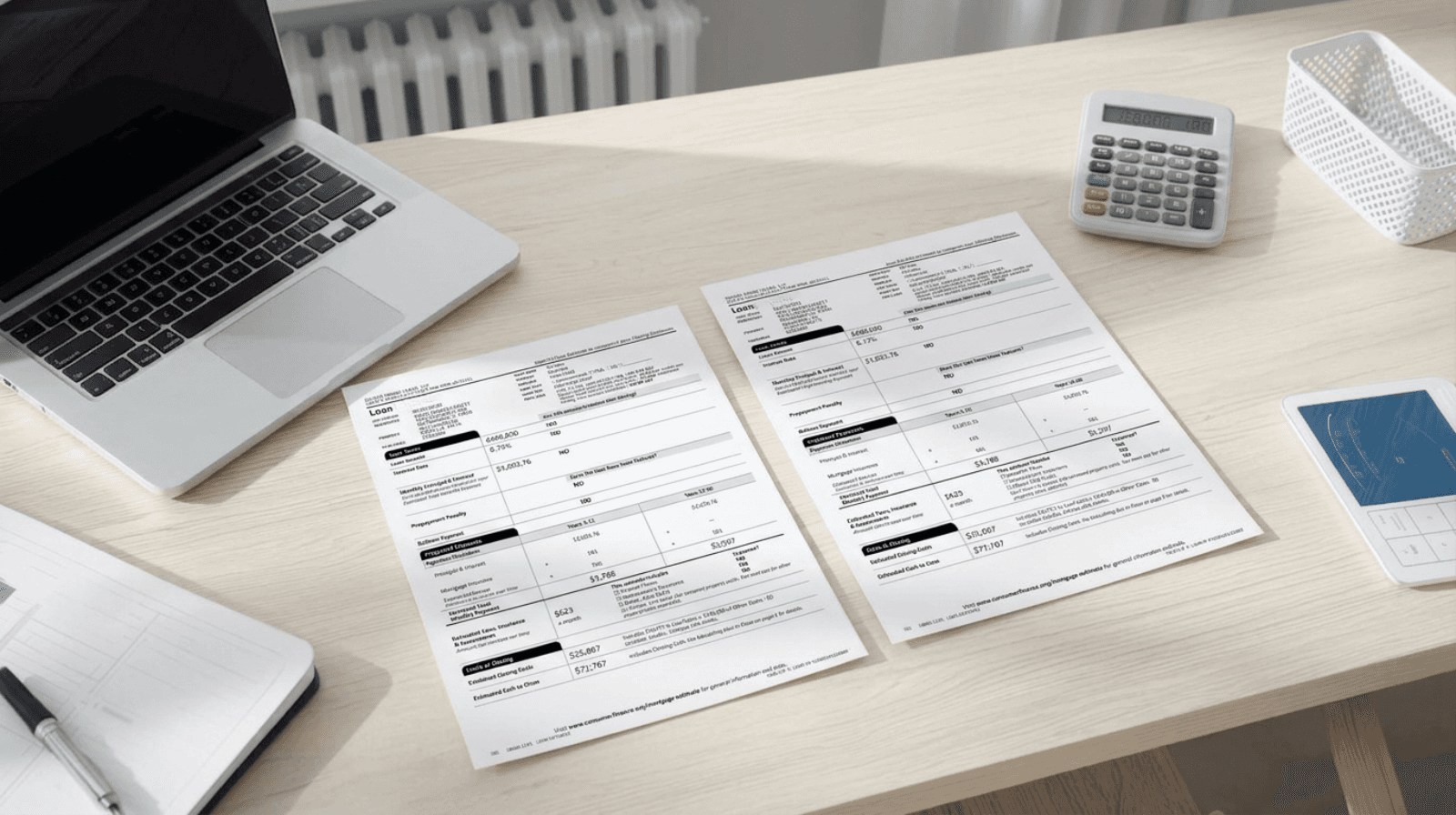

If you’re thinking about refinancing, one of the biggest decisions you'll make is choosing between a 30-year or 15-year mortgage. Both options can lower your rate, reduce interest costs, or improve cash flow — but they offer very different outcomes.
A 30-year refinance gives you the lowest monthly payment and the most flexibility. A 15-year refinance helps you pay off your mortgage faster and save tens (if not hundreds) of thousands in interest. The right choice depends on your financial goals, cash flow, and long-term plans.
This guide breaks down the key differences, monthly payment comparisons, savings calculations, eligibility considerations, and how to determine which term fits your budget and goals.
Key Takeaways
✅ A 30-year refinance lowers your monthly payment and increases financial flexibility
✅ A 15-year refinance accelerates payoff and can save you significant lifetime interest
✅ 15-year loans usually come with lower interest rates than 30-year loans
✅ Your choice should reflect your budget, investment strategy, and how long you plan to stay in the home
Why the 30-Year vs. 15-Year Decision Matters
Your mortgage term affects almost everything:
Your monthly budget
Your total interest cost
Your DTI (Debt-to-Income ratio)
Your investment strategy
Your retirement timeline
Your home equity growth
Choosing the right term can significantly affect your long-term interest costs and monthly payment — or give you the financial breathing room you need right now.
30-Year vs. 15-Year Refinance: What’s the Difference?
Here’s a simple overview before diving deeper:
30-Year Refinance Advantages
Lowest monthly payment
Greater budget flexibility
Easier qualification (lower DTI)
Free cash for savings, investing, or paying off other debt
15-Year Refinance Advantages
Lower interest rate
Significant lifetime interest savings
Faster payoff
Faster equity growth
Stronger long-term financial benefit
Monthly Payment & Interest Savings Comparison
Let’s run the numbers using a common loan amount.
Loan Amount: $350,000
Example market rates:
30-year rate: 6.25%
15-year rate: 5.25%
Loan Type | Monthly Payment | Total Interest Paid |
30-Year | ~$2,155 | ~$425,000 |
15-Year | ~$2,804 | ~$154,000 |
Key Insights
The 15-year payment is about $649 higher per month.
The 15-year loan saves about $271,000 in interest.
The 30-year loan gives you the most breathing room each month.
Both loans have advantages — the right choice depends on your current needs and long-term goals.
Many homeowners are surprised to learn that two lenders can quote different rates for the exact same refinance scenario.
Example for illustration only. Actual mortgage rates, payments, and eligibility vary based on credit profile, loan-to-value ratio, lender pricing, and market conditions.
Savings Calculator: Estimate Your Own Numbers
Use this simple formula to estimate your monthly payment:
Monthly Payment = P × (r × (1 + r)^n) / ((1 + r)^n – 1)
Where:
P = loan amount
r = monthly interest rate (annual rate ÷ 12)
n = number of months (360 for 30-year, 180 for 15-year)
Short Version:
To estimate:
Compare your current rate to today's 15- and 30-year rates.
Plug in your remaining balance, not your original loan amount.
Calculate total interest:
💡 Pro Tip: You can drop these numbers into a spreadsheet or plug them into a mortgage calculator to see exact results.
When a 30-Year Refinance Makes More Sense
A 30-year refinance is ideal when you prioritize:
1️⃣ Lower Monthly Payments
If your budget is tight or your expenses are rising, the lower payments of a 30-year mortgage provide important flexibility.
2️⃣ Major Life Transitions
Switching to a 30-year term can help with:
New childcare expenses
Medical costs
Caring for aging parents
Job changes
Growing a business
Divorce or separation
3️⃣ Paying Down Higher-Interest Debt
It may make more sense to free up cash flow and pay down those higher-rate debts first if you carry:
Credit card balances
Personal loans
Auto loans with high APR
4️⃣ Flexible Investment Strategy
Some homeowners prefer:
Maxing out retirement accounts
Investing in the stock market
Growing emergency savings
A lower mortgage payment can create more room to invest.
5️⃣ Rental Property Plans
If you plan to convert your home into a rental soon:
A lower payment boosts cash flow
A 30-year loan may improve rental ROI
When a 15-Year Refinance Makes More Sense
A 15-year term is ideal when you want:
1️⃣ Massive Interest Savings
The biggest benefit of a 15-year loan is how much less interest you pay over time.
2️⃣ Faster Debt-Free Timeline
Paying off your home early can help:
Reduce financial stress
Increase retirement flexibility
Lower long-term housing costs
3️⃣ Strong, Stable Income
If your budget easily supports a higher payment, a 15-year loan maximizes long-term wealth.
4️⃣ A Predictable Path to Retirement
A 15-year loan aligns well if you:
Want to retire mortgage-free
Are in your peak earning years
Have strong savings
5️⃣ Higher Equity Growth
More of your payment goes toward principal each month, increasing your:
Net worth
Housing stability
Ability to sell or refinance later
30-Year Refinance: Pros & Cons
✔ Pros
Lowest payment
Highest flexibility
Easier qualification
Better for cash flow
Helps manage other debts
✘ Cons
Higher total interest
Slower equity building
Longer payoff timeline
15-Year Refinance: Pros & Cons
✔ Pros
Lower interest rate
Significant interest savings
Faster payoff
Faster equity growth
Ideal for retirement planning
✘ Cons
Higher monthly payment
Less cash-flow flexibility
Harder to qualify for (DTI impact)
How to Decide: Questions to Ask Yourself
✔ Is your income stable enough for a higher payment?
If not, choose the 30-year.
✔ Are you prioritizing long-term savings or monthly flexibility?
Savings → 15-year
Flexibility → 30-year
✔ Do you have high-interest debt to pay off?
If yes, a 30-year may work better.
✔ How close are you to retirement?
Closer to retirement → 15-year
Far from retirement → either term can work
✔ Do you expect major expenses in the next 5–10 years?
If yes, avoid locking into a higher mandatory payment.
✔ How long do you plan to stay in the home?
Staying long-term → 15-year offers more savings
Unsure → 30-year gives more room to maneuver
Eligibility Considerations (For Both Loan Types)
Regardless of the term, lenders check:
Credit Score
620 minimum for most conventional refis
700+ for ideal pricing
Equity / LTV
Best rates at 80% LTV or lower
Cash-out is typically capped at 80% LTV
Debt-to-Income (DTI)
30-year loans allow higher DTI
15-year loans require lower DTI due to bigger payments
Income Stability
Consistent earnings over 2 years preferred
Payment History
No recent mortgage late payments
Why 15-Year vs 30-Year Refinance Offers Can Vary Between Lenders
Even for the exact same borrower profile, refinance offers can vary between lenders because each lender sets its own:
interest rate pricing
lender fees
discount points
underwriting margins
rate-lock policies
That means two lenders may offer different rates or closing costs for the same 15-year or 30-year refinance.
Even small differences — such as a 0.25% interest rate or a few thousand dollars in fees — can meaningfully affect the long-term cost of a mortgage.
Reviewing your Loan Estimate carefully helps you understand whether the offer you're receiving is competitive.
Frequently Asked Questions
1. Do 15-year mortgages really have lower interest rates?
Yes. Lenders offer lower rates because shorter terms carry less risk.
2. Can I switch from a 30-year to a 15-year loan later?
Yes. You can refinance again or simply make extra principal payments.
3. Will refinancing hurt my credit?
Only slightly from the inquiry. On-time payments strengthen your score long-term.
4. Can I choose a custom term (like 20 or 25 years)?
Yes. Many lenders offer “custom term” refinances.
5. Is it okay to choose a 15-year loan if rates are higher now?
Sometimes yes — the savings from shorter payoff can outweigh rate differences.
Bottom Line
Choosing between a 30-year and 15-year refinance depends on your goals:
If you want lower payments and more flexibility, the 30-year is a strong choice.
If you want maximum savings and a faster payoff, a 15-year refinance is the better long-term investment.
Before you lock your rate or finalize your refinance, it can be helpful to review your Loan Estimate and understand how your offer compares.
You can upload your Loan Estimate to Fincast to see how your 15-year or 30-year refinance terms compare across vetted lenders.
It’s free, private, and helps you understand whether your current offer is competitive — before you lock your rate or close your refinance.
Disclaimer: Nothing in this content should be considered financial advice. The examples and data shared are for general information only and may not reflect your personal situation. We do not guarantee the accuracy or completeness of the information provided. Always do your own research and speak with a qualified financial advisor before making any financial decisions.
Ready to Save On Your New Mortgage?